Garni and Geghard in One Day: The Short Answer
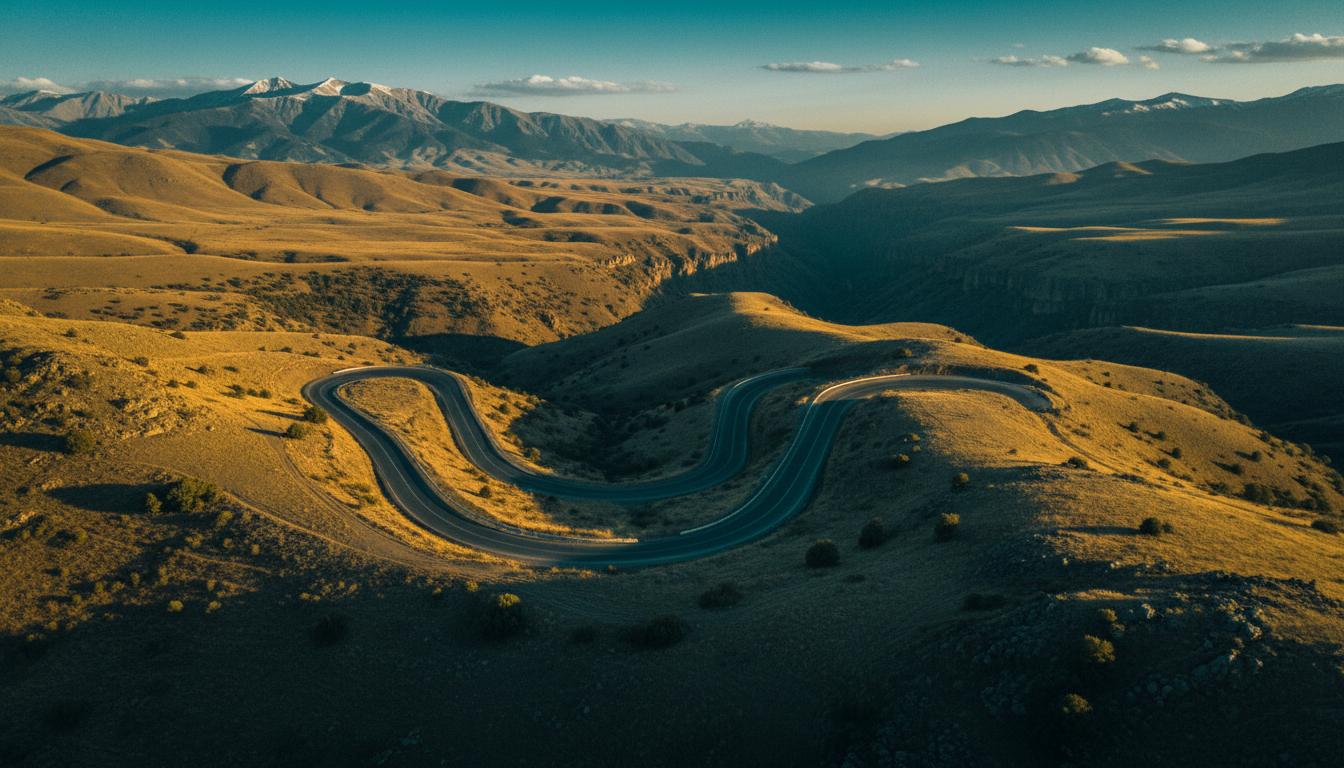
Garni Temple and Geghard Monastery sit 10 km apart in the Azat River valley, about 30 km east of Yerevan. You can see both in 4 to 6 hours by taxi, by group tour, or by public minibus. Garni costs 1,500 AMD to enter, Geghard is free, and the whole trip can be done for under $15 on public transport. Add the Symphony of Stones basalt gorge below Garni and lunch in the village, and you have the most rewarding half-day trip in Armenia.
This guide covers how to get there, what to see at each site, a realistic schedule, and the details most blogs skip.
Why Garni and Geghard Belong Together
The two sites tell opposite halves of Armenia's story in a single valley.
Garni is a pagan Greco-Roman temple from the 1st century AD, built when Armenia was a kingdom balancing between Rome and Parthia. It is the only standing colonnaded Greco-Roman temple in the former Soviet Union.
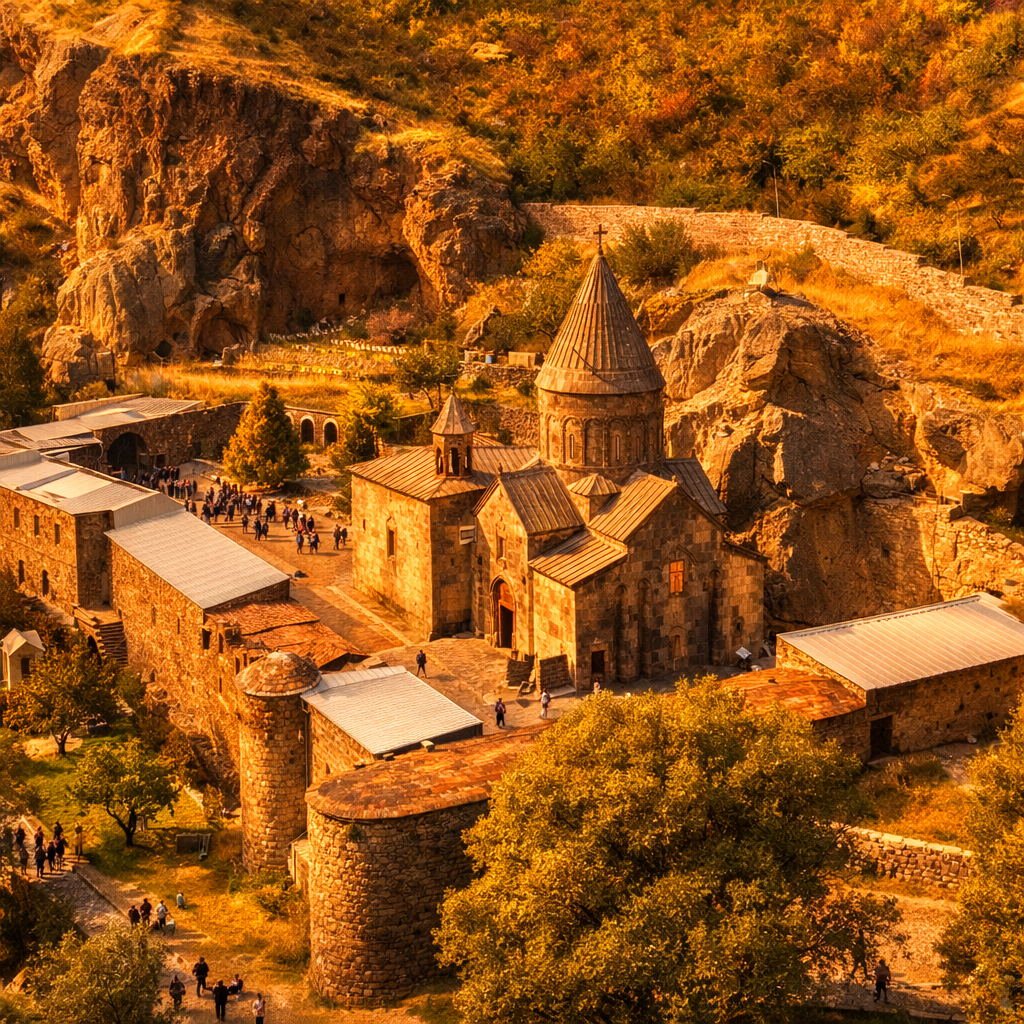
Geghard is a medieval Christian monastery partly carved into a cliff, founded at a sacred spring after Armenia became the first nation to adopt Christianity in 301 AD.
Seeing them back to back is the fastest way to understand how Armenia changed from a Hellenistic kingdom into a Christian one.
Garni Temple: What to See
The temple
Garni Temple is traditionally attributed to King Tiridates I and often dated to around 77 AD. It stands on a high basalt podium on the edge of a cliff, surrounded by 24 Ionic columns. Most historians believe it was dedicated to Mihr, the Armenian sun god.
The temple survived the arrival of Christianity, possibly because it served as a royal summer residence. It did not survive the earthquake of 1679, which brought it down completely. What you see today was rebuilt between 1969 and 1975, using the original stones wherever they could be found. Look closely and you can tell the darker original blocks from the plain new ones.
The royal bathhouse
Just north of the temple are the ruins of a 3rd-century Roman-style bath. Its floor mosaic shows sea gods and fish, with a Greek inscription that reads roughly "we worked without receiving anything." Historians still argue about what the inscription means.
The fortress and the gorge view
The temple sits inside the remains of a fortress that guarded the Azat valley for over a thousand years. Walk to the cliff edge behind the temple for the view straight down into the gorge. This is also where you can see the hexagonal basalt columns of the Symphony of Stones far below.
Garni at a glance
| Ticket | 1,500 AMD adults, 750 AMD students and pensioners, free under 12 |
| Hours | Tuesday to Sunday, 10:00 to 21:30 (official museum hours) |
| Time needed | 45 to 60 minutes |
| Guided tour on site | 5,000 AMD in a foreign language |
The official museum site lists Tuesday to Sunday. If you plan to go on a Monday, check before you set off.
Symphony of Stones: The Gorge Below Garni
The Symphony of Stones is a wall of giant hexagonal basalt columns lining the Azat River gorge, formed when lava cooled slowly and cracked into near-perfect geometric shapes. The columns hang from the cliffs like organ pipes, which gave the place its name.
From Garni Temple, a road winds down into the gorge. It takes about 30 to 40 minutes to walk down and a bit longer to walk back up. Local drivers wait near the temple and offer 4x4 rides down and back if you would rather not climb. Go in the morning or late afternoon in summer, since the gorge has little shade.
Geghard Monastery: What to See
The cave monastery
Geghard was originally called Ayrivank, "the monastery of the cave." Tradition says Gregory the Illuminator founded it in the 4th century at a spring inside a cave that was already sacred before Christianity.
Its current name means "monastery of the spear." For centuries it kept the Holy Lance, said to be the spear that pierced Christ at the crucifixion. The relic is now in the treasury at Etchmiadzin, but the name stayed.
Katoghike Church
The main freestanding church was built in 1215 under the Zakarian princes. Its walls are covered in carved crosses and inscriptions left by pilgrims over 800 years.
The rock-cut churches
The real reason to come is behind the main church. In the 13th century the Proshyan princes bought the monastery and carved new churches directly into the mountain. Inside the first one, the spring still flows from the rock. In the second, the Proshyan family tomb is marked by a carved coat of arms: two lions chained together with an eagle holding a lamb.
The acoustics are extraordinary. Clap once or hum a note and the sound circles the dome for several seconds. On weekends a small choir sometimes sings here, and if you hear it, stay.
Wishes, ribbons and gata
Outside, you will see trees tied with strips of cloth and people trying to throw pebbles into holes in the cliff. Both are wish-making traditions. Near the entrance, local women sell gata, a sweet Armenian bread, and dried fruit. Buy some. It is the best snack of the day.
Geghard at a glance
| Ticket | Free |
| Hours | Daily, roughly from morning until dusk |
| Time needed | 45 to 60 minutes |
| Dress code | Shoulders and knees covered; scarves are available at the entrance |
| UNESCO status | World Heritage Site since 2000, together with the Upper Azat Valley |
How to Get from Yerevan to Garni and Geghard
Option 1: Taxi or private driver (easiest)
Book a car through the Yandex Go or GG apps, or ask your hotel to arrange a driver for half a day. Agree the route and waiting time before you leave. A driver who takes you to Geghard, Garni and back usually costs somewhere between 10,000 and 15,000 AMD for the car, which is good value split between two to four people.
Ask the driver to stop at the Charents Arch on the way out of Yerevan. On a clear morning it frames the best view of Mount Ararat in the region.
Option 2: Group tour (cheapest without planning)
Dozens of Yerevan agencies run daily Garni and Geghard tours, often combined with the Symphony of Stones or Lake Sevan. Expect about $15 to $35 per person. The trade-off is time: you get 30 to 40 minutes at each site and move with the group.
Option 3: Public minibus (cheapest overall)
Minibus (marshrutka) 266 leaves for Garni from the Gai bus station in northeast Yerevan, next to the Mercedes-Benz showroom on Gai Avenue. It runs roughly every 30 minutes, takes 30 to 40 minutes, and costs about 500 AMD.
There is no regular public transport between Garni and Geghard. From Garni, take a local taxi up to Geghard and back. Drivers wait near the temple, and the trip costs a few thousand dram including waiting time. Settle the price before you get in.
Option 4: Rent a car
The road from Yerevan is paved and simple to drive, and both sites have free parking. A car is the best choice if you want to continue to Lake Sevan or Dilijan afterwards.
A Realistic Half-Day Schedule
| Time | Stop |
|---|---|
| 09:00 | Leave Yerevan, stop at Charents Arch for the Ararat view |
| 09:45 | Geghard Monastery, before the tour buses arrive |
| 11:00 | Drive back down the valley to Garni |
| 11:15 | Garni Temple, bathhouse and gorge viewpoint |
| 12:15 | Walk or drive down to the Symphony of Stones |
| 13:30 | Lunch in Garni village |
| 15:00 | Back in Yerevan |
Why Geghard first? Most tours do Garni first, so Geghard is quietest in the morning. The cave churches are also at their most atmospheric with fewer people inside.
Want the sunset instead? Reverse the order and arrive at Garni in the late afternoon. The temple is lit up after dark and the gorge glows orange at sunset.
Where to Eat
Several families in Garni village open their homes and gardens for lunch. Many of them will show you how lavash is baked in a tonir, the clay oven dug into the ground, and let you try it straight from the oven. Expect a long table of khorovats, fresh herbs, cheese, and vegetables from the garden. Ask your driver for a recommendation or look for signs along the main road.
Practical Tips
- Bring cash. Ticket offices, minibuses, gata sellers and village restaurants all prefer Armenian dram.
- Wear good shoes. The paths at Garni and the walk to the Symphony of Stones are uneven.
- Download your audio guides before leaving Yerevan. Mobile signal inside the Geghard cave churches is weak or absent.
- Spring and autumn are best. Summer midday heat in the gorge is intense, and winter roads are fine but the gorge walk can be icy.
- Respect services. Geghard is an active monastery. If a liturgy or wedding is underway, keep your voice and your camera down.
Hear the Stories Where They Happened
Most visitors walk through Garni and Geghard in 30 minutes and leave with photos but no idea what they saw. The GuideMe app has narrated audio guides for both sites, written by local historians: why Tiridates built a temple to the sun, who carved the churches into the cliff, and what the lions on the Proshyan tomb mean.
The app works offline, so it plays inside the cave churches where your phone has no signal. It speaks 9 languages, covers 150+ locations across Armenia, and costs a one-time $4.99 for the full library. See how it works on the GuideMe app overview.
Planning more of your trip? Read our Armenia travel guide and our list of things to do in Yerevan.
Frequently Asked Questions
Can you visit Garni and Geghard in one day?
Yes, easily. The two sites are 10 km apart, and both can be visited in a half day from Yerevan. Allow 4 to 6 hours including travel, or a full day if you add the Symphony of Stones walk and a long village lunch.
How much does it cost to visit Garni Temple?
Entry to Garni Temple costs 1,500 AMD for adults and 750 AMD for students and pensioners. Children under 12 enter free. Geghard Monastery is free to visit.
How do I get from Yerevan to Garni by public transport?
Take minibus 266 from Gai bus station on Gai Avenue in Yerevan. It runs about every 30 minutes, takes 30 to 40 minutes, and costs around 500 AMD. To continue to Geghard, take a local taxi from Garni.
Which should I visit first, Garni or Geghard?
Visit Geghard first in the morning, when it is quietest and the cave churches feel most atmospheric. Then come back to Garni for the temple, the gorge and lunch. For sunset photos, reverse the order.
Is the Symphony of Stones worth it?
Yes, if you have an extra hour. The basalt column formations are unique in the region, and the walk down from Garni Temple takes about 30 to 40 minutes. Local 4x4 drivers offer rides if you would rather not walk back up.
Is there an audio guide for Garni and Geghard?
Yes. The GuideMe app includes narrated audio guides for Garni Temple and Geghard Monastery in 9 languages. Download them before you leave Yerevan and they play offline at both sites.