Garni Temple: The Short Answer
Garni Temple is a 1st-century Greco-Roman temple on a cliff above the Azat River gorge, about 30 km east of Yerevan. It is the only standing colonnaded pagan temple in Armenia and the wider former Soviet Union. Entry costs 1,500 AMD for adults, with reduced tickets for students, pensioners and children. Getting there takes 40 minutes by taxi or about an hour by minibus 266 from Yerevan's Gai bus station. Plan 1 to 2 hours on site, or half a day if you add the Symphony of Stones gorge below.
This guide covers the temple's history, what to look for on site, tickets and hours, every way to get there, and the best time to go.
What Is Garni Temple?
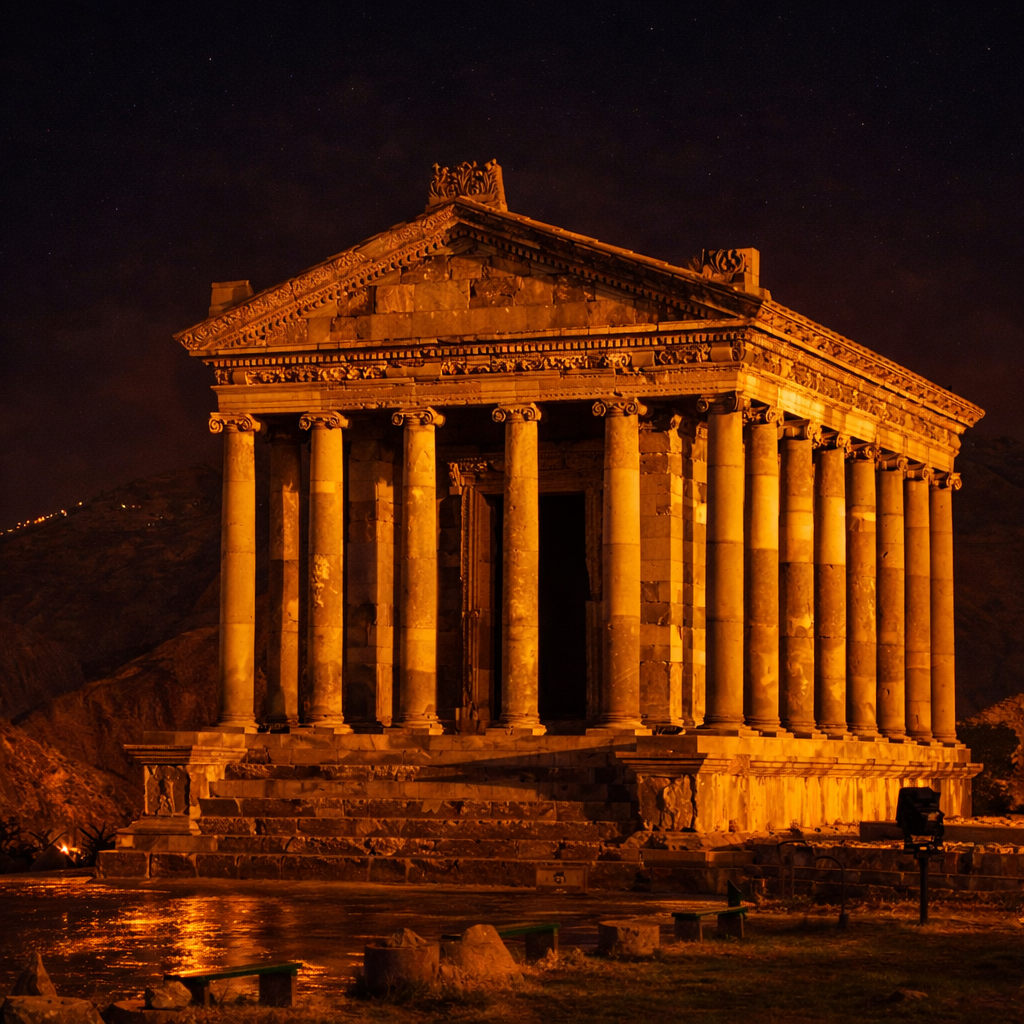
Garni is a small Ionic temple of grey basalt, standing on a high podium with nine steps and surrounded by 24 columns. It looks like something from Athens or Rome, and that is the point: it was built when Armenia was a Hellenistic kingdom with one foot in the Roman world and one in the Persian.
It sits inside the walls of the Garni fortress, on a triangular promontory where the cliffs drop straight into the gorge on two sides. For more than a thousand years this was one of the strongholds of Armenian kings and their summer residence.
Garni at a glance
| Location | Garni village, Kotayk Province, about 30 km east of Yerevan |
| Built | 1st century AD, traditionally dated to around 77 AD |
| Ticket | 1,500 AMD adults; reduced tickets for students, pensioners and children |
| Hours | Open daily; hours change by season (see below) |
| Time needed | 1 to 2 hours for the temple, bathhouse and viewpoint |
| Getting there | Taxi 40 min, minibus 266 about 1 hour, or a group tour |
| Guided tour on site | Available at the ticket office, about 5,000 AMD in a foreign language |
A 3-Minute History of Garni
A fortress older than the temple
People defended this cliff long before the temple was built. An Urartian cuneiform inscription found at Garni records King Argishti I conquering the area in the 8th century BC. Later Armenian kings of the Orontid and Artaxiad dynasties fortified the promontory with walls and towers, parts of which you can still trace today.
Tiridates I and the temple of the sun
The temple is traditionally attributed to King Tiridates I, who was crowned king of Armenia by the Roman emperor Nero in Rome in 66 AD. Ancient sources say Nero gave him money and craftsmen to rebuild his country, and Garni is often linked to that gift. A Greek inscription found in the village in 1945 names Tiridates as "the sun" and refers to the 11th year of his reign, which is where the date of about 77 AD comes from.
Most historians believe the temple was dedicated to Mihr, the Armenian god of the sun and light, related to the Persian Mithra. Some scholars argue it may have been a tomb or memorial instead. That debate is one of the reasons the site is so interesting to visit with a good guide.
Why it survived Christianity
When Armenia became the first Christian nation in 301 AD, pagan temples across the country were destroyed. Garni was spared, most likely because it had become part of the royal summer residence rather than an active place of worship. The sister of King Tiridates III, Khosrovidukht, is said to have lived here.
The earthquake and the rebuild
The temple stood for about 1,600 years until the earthquake of 1679 brought it down. For almost three centuries its stones lay scattered across the plateau. Between 1969 and 1975, architect Alexander Sahinian led the reconstruction, putting the original blocks back in place wherever they could be identified and filling the gaps with new, plain basalt.
Look closely at the columns and walls: the darker, carved stones are original, and the smooth lighter ones are from the 20th century. Nothing was invented. Where no original survived, the restorers left the surface plain on purpose.
What to See at Garni
The temple itself
Walk around the outside before you go in. The frieze below the roof is carved with acanthus leaves, and the podium steps are deliberately tall, almost knee height, which made the temple feel even more imposing. On the pedestals flanking the front steps, look for the carved figures of Atlas holding up the stone.
Inside is a single small room, the cella, where a statue of the god would once have stood. Today it is empty, which makes the acoustics striking. Musicians sometimes play the duduk here, and the sound fills the room.
The royal bathhouse
North of the temple are the ruins of a 3rd-century Roman-style bathhouse with four rooms, including hot and cold baths heated by a system under the floor. A modern roof protects the floor mosaic, which shows sea gods, nereids and fish around the face of the ocean god. Its Greek inscription reads roughly "we worked without receiving anything." Nobody agrees what it means: a complaint from unpaid workers, or a proud statement that they did it for free.
The church and the palace ruins
Next to the temple are the foundations of a 7th-century round church and the remains of the royal palace. These ruins are easy to miss, but they show how the site kept being used after the temple stopped being a temple.
The cliff-edge viewpoint
Walk behind the temple to the edge of the promontory. The drop into the Azat gorge is dramatic, and on the far side you can see the hexagonal basalt columns of the Symphony of Stones. This is the best photo spot at Garni, especially in late afternoon light.
Garni Tickets and Opening Hours
Entry is 1,500 AMD for adults. Students, pensioners and children pay reduced prices, and the ticket office accepts cash in Armenian dram. Card payment is sometimes available, but do not count on it.
Opening hours change with the season, and published sources disagree. In general, the site opens in the morning and stays open until around 18:00 in the colder months and much later, into the evening, in summer, when the temple is lit up after dark. If you plan an early start, a late visit or a Monday trip, check with your hotel or the official museum-reserve site before you set off.
On some national holidays, including Vardavar in July, entry has been free for part of the day. Expect big crowds on those days.
How to Get from Yerevan to Garni Temple
By taxi (easiest)
Order a car through the Yandex Go or GG apps. The ride takes about 40 minutes, and the app shows the fare before you book. Getting a ride back from Garni is harder, so either ask the driver to wait or arrange a return trip in advance. Many travellers book a driver for half a day and combine Garni with Geghard Monastery.
On the way, ask the driver to stop at the Charents Arch at the edge of Yerevan. On a clear morning it frames one of the best views of Mount Ararat.
By minibus 266 (cheapest)
Minibus (marshrutka) 266 leaves from the Gai bus station in northeast Yerevan, next to the Mercedes-Benz showroom on Gai Avenue. It runs roughly every 30 minutes, takes 40 to 60 minutes, and costs about 500 AMD. Ask the driver for "Garni tachar" (Garni Temple) and get off in the village center, a short walk from the entrance.
For the full public-transport picture, including how to continue to Geghard, see our Garni and Geghard day trip guide.
By group tour
Almost every Yerevan agency runs a Garni tour, usually combined with Geghard, the Symphony of Stones or Lake Sevan. It is the simplest option if you do not want to plan anything, but you will get only 30 to 45 minutes at the temple.
By car
The road from Yerevan is paved and easy to drive, and there is parking near the entrance. A car is the best choice if you want to see Garni at sunset and drive back after dark.
Best Time to Visit Garni
- Season: May, June, September and October have the best weather. Summer is hot and the plateau has little shade. Winter visits are quiet and beautiful, with snow on the columns.
- Time of day: Arrive at opening time to have the temple almost to yourself, or come in the late afternoon for golden light on the gorge. Tour groups peak between 11:00 and 15:00.
- Sunset: The temple is lit after dark, and the sunset over the gorge is the most photographed moment of the day.
- Pagan festivals: Armenia's small neo-pagan community holds ceremonies at Garni on traditional holidays such as Navasard, the old Armenian New Year in August. If your visit falls on one of these dates, you may see rituals at the temple.
What to Combine with Garni
- Symphony of Stones: The basalt column gorge directly below the temple. The walk down takes 30 to 40 minutes, and local drivers offer 4x4 rides.
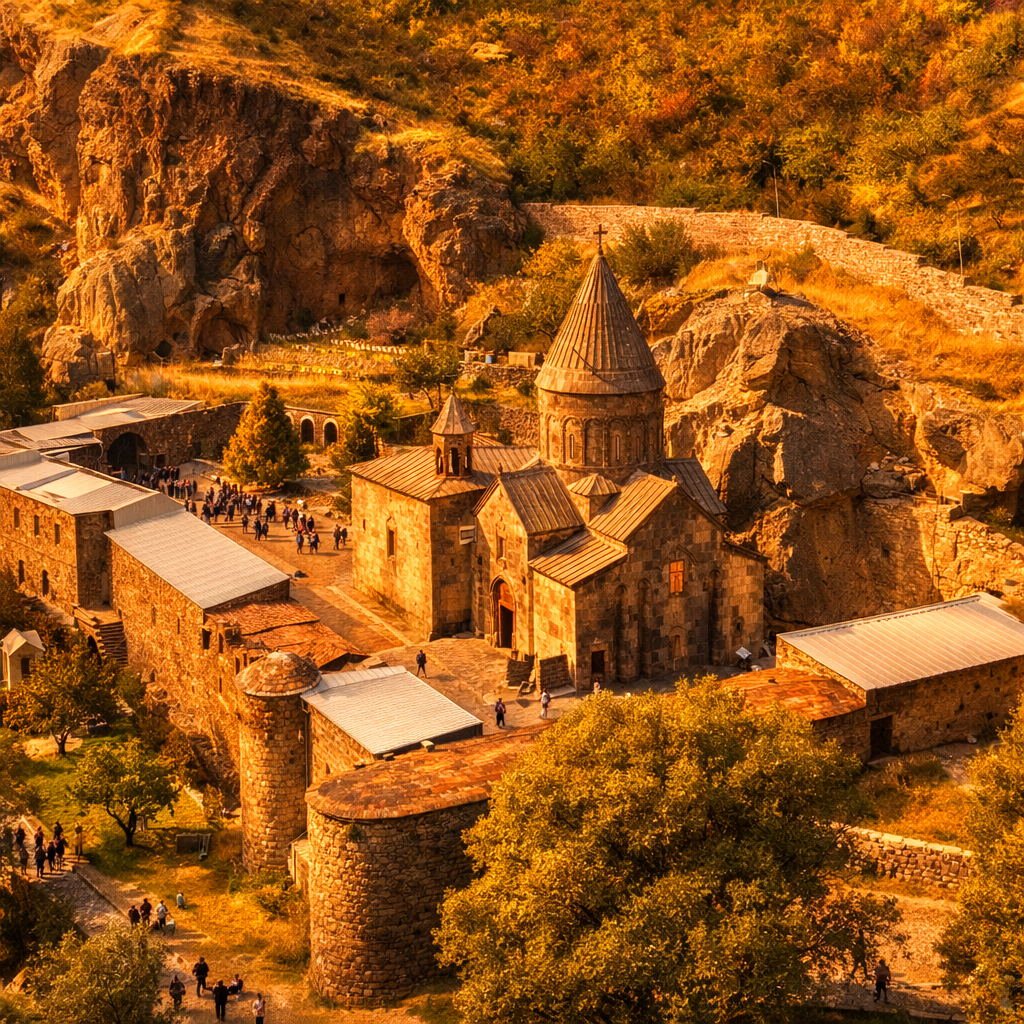
- Geghard Monastery: A UNESCO-listed monastery carved into the cliff, 10 km up the valley. Together they make the most popular half-day trip from Yerevan.
- Lavash baking in Garni village: Several family homes offer lunch and show you how lavash is baked in a tonir, a clay oven dug into the ground.
- Lake Sevan: About an hour's drive further, if you want to turn the trip into a full day.
Practical Tips for Visiting Garni
- Bring cash for the ticket, the minibus and any souvenirs.
- Wear shoes with grip. The temple steps are steep and the basalt can be slippery after rain.
- Bring water and a hat in summer.
- Hold on to children near the cliff edge. Railings do not cover every viewpoint.
- Download your audio guide before you leave Yerevan. Signal is fine in the village, but you will not want to wait for audio to load at the site.
Hear the Story of Garni Where It Happened
Most visitors spend 20 minutes at Garni, take a photo of the columns and leave. The GuideMe app has a narrated audio guide for Garni Temple, written with local historians: why a king who was crowned by Nero built a temple to the sun, how it outlived Christianity, and how the restorers put it back together stone by stone.
The guide plays offline and is available in 9 languages. See what the app can do or read the GuideMe app overview.
Planning more of your trip? Start with our Armenia travel guide and our list of things to do in Yerevan.
Frequently Asked Questions
How much does it cost to enter Garni Temple?
Adult entry costs 1,500 AMD. Students, pensioners and children pay reduced prices. On some national holidays, such as Vardavar, entry has been free for part of the day.
How long do you need at Garni Temple?
One to two hours is enough for the temple, the bathhouse mosaic and the cliff viewpoint. Add one to two hours if you walk down to the Symphony of Stones and back.
How do I get from Yerevan to Garni by public transport?
Take minibus 266 from the Gai bus station on Gai Avenue in Yerevan. It runs about every 30 minutes, takes 40 to 60 minutes and costs around 500 AMD. Get off in the center of Garni village and walk to the temple.
Who was Garni Temple dedicated to?
Most historians believe it was dedicated to Mihr, the Armenian god of the sun. It was built by King Tiridates I in the 1st century AD. Some scholars think it may have been a tomb or memorial instead.
Is Garni Temple original?
Partly. The temple collapsed in the earthquake of 1679 and was rebuilt between 1969 and 1975 using the original stones wherever possible. The darker, carved blocks are original; the plain ones are new.
Is there an audio guide for Garni Temple?
Yes. The GuideMe app includes a narrated audio guide for Garni Temple in 9 languages. Download it before you leave Yerevan and it plays offline at the site.